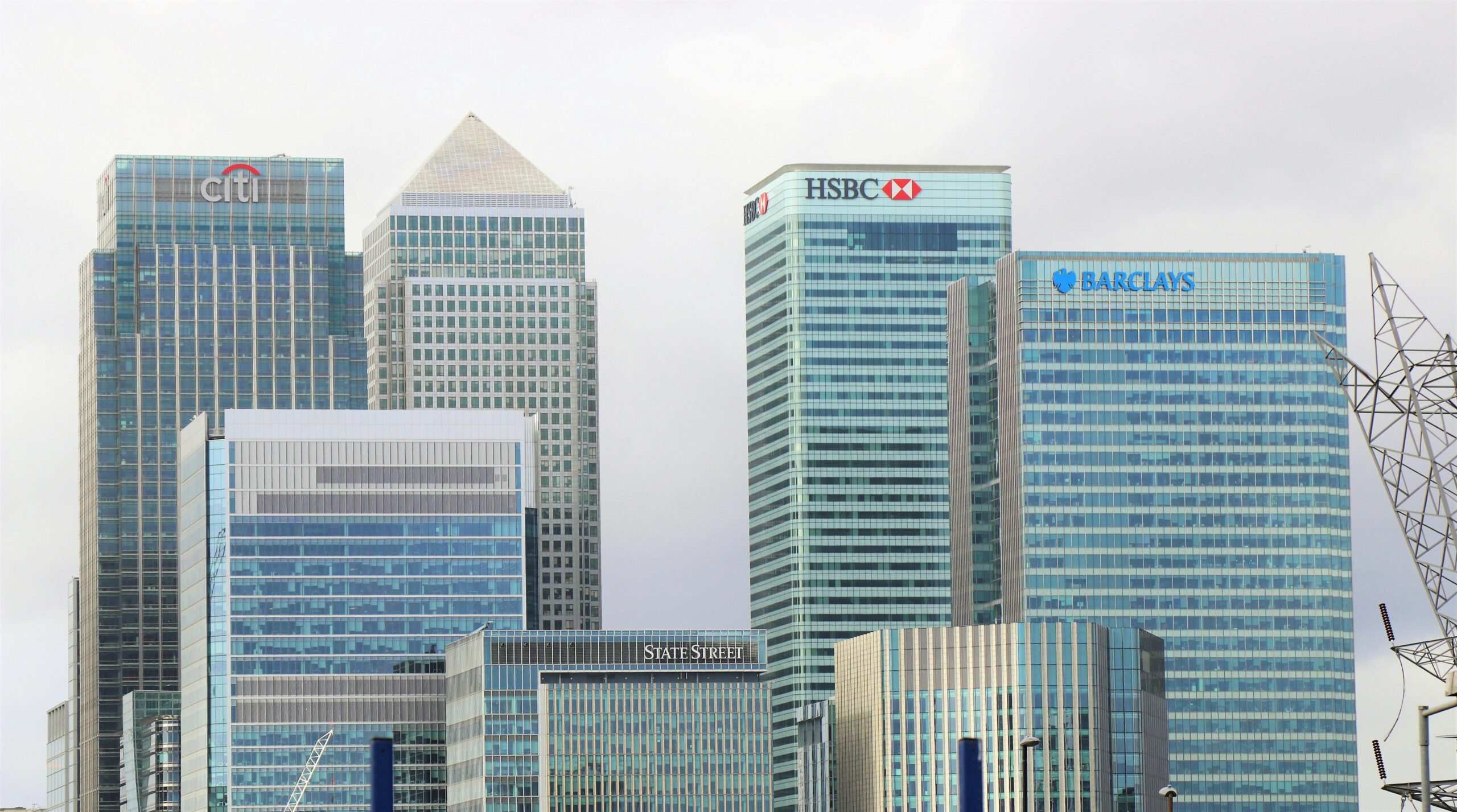
Most people pick their bank once and never look back, letting paychecks flow in and bills flow out while hundreds of dollars quietly disappear to maintenance fees and foregone interest. Banks count on this inertia. They’re betting you won’t do the math on how much that $12 monthly fee actually costs you over a decade, or notice that your savings account is earning essentially nothing while online competitors are paying 4%+.
The banking landscape has shifted dramatically. Online banks are delivering APYs several multiples higher than traditional institutions, credit unions are competing aggressively with rates that would have seemed impossible five years ago, and the gap between the best and worst options has never been wider. The difference between a thoughtful banking setup and the default option your parents opened for you in college can easily exceed $500 annually.
This guide examines what actually matters when selecting financial institutions, cutting through marketing noise to focus on account mechanics, real costs, and practical tradeoffs backed by current market data.
How to Choose a Bank? Start With Your Actual Banking Patterns
Before comparing APYs and fee schedules, assess how you actually interact with your money, as usage patterns determine which institutions align with your needs rather than which have the most aggressive marketing campaigns.
Cash usage frequency matters significantly, particularly if you regularly deposit cash, as online-only banks present logistical challenges despite their superior rates. Travel patterns affect ATM network requirements, with frequent travelers benefiting substantially from banks offering fee reimbursements or extensive networks. Digital banking comfort level influences whether you value branch access or can operate entirely through mobile and web interfaces.
An online bank offering 4% APY delivers limited practical benefit if your lifestyle requires regular cash deposits or quarterly visits to notarize documents, situations where physical branch access remains functionally necessary despite the lower returns.
Checking Accounts: Daily Transaction Infrastructure
Checking accounts handle the unglamorous work of daily finance. Direct deposits arrive here, bills get paid from here, and if you’re like most people, you check the balance more often than you’d care to admit. The account needs to be accessible, cost you nothing in fees, and process transactions reliably without surprise charges appearing three days later.
Fee Structures and Waiver Conditions
Here’s something worth knowing: average checking account maintenance fees at major banks run approximately $13.95 monthly according to FDIC research, which translates to $167.40 annually for basic account access. Many consumers pay these fees year after year without exploring alternatives, effectively paying for the privilege of accessing their own money.
Multiple banks now offer fee-free checking with no conditions attached, as NerdWallet’s 2026 analysis documents institutions like SoFi, Chime, and Ally providing checking accounts without monthly fees, minimum balance requirements, or hidden maintenance charges.
Traditional banks often waive fees if you meet specific conditions, with Chase waiving their $12 monthly fee when direct deposits total at least $500 per month. For consumers already receiving direct deposit, this effectively converts to a no-fee account while maintaining traditional bank infrastructure and branch access.
ATM Network Coverage and Associated Costs
Out-of-network ATM fees accumulate faster than most people track, and banks know it. Your bank hits you for roughly $3, the ATM owner tacks on another $3.50, and suddenly that quick $40 withdrawal just cost you $6.50 in fees. Do that twice a month and you’re down $156 annually, which is roughly the cost of a decent gym membership, except you’re getting nothing in return.
Network size directly impacts these costs, with current market analysis showing Capital One providing access to 70,000+ fee-free ATMs, Chime offering 47,000+ locations, and institutions like Schwab reimbursing all ATM fees worldwide. That last one is particularly valuable if you travel frequently or live somewhere with limited network coverage.
If cash remains part of your regular transaction patterns, whether for laundromats, farmers markets, or businesses that don’t accept cards, extensive ATM networks represent essential infrastructure rather than a convenience feature.
Interest-Earning Checking Options
Traditional checking accounts historically generated minimal interest, though market dynamics have shifted this assumption, as several checking accounts currently pay up to 5.00% APY in 2026.
Connexus Credit Union’s Xtraordinary Checking delivers 5.00% APY on balances up to $25,000, requiring 15 debit transactions monthly, direct deposit setup, and electronic statements. Hope Credit Union offers 5.12% APY on up to $10,000 with similar activity requirements.
The value proposition depends on your balance and natural transaction patterns, since a $10,000 balance earning 5.12% APY generates $512 annually compared to zero at traditional banks. For consumers already meeting transaction requirements through normal spending patterns, this represents pure additional return requiring minimal behavioral modification.
For straightforward options without activity requirements, SoFi offers 0.50% APY on checking balances with no conditions beyond opening the account, delivering lower yield but eliminating any transaction tracking or maintenance requirements.
Overdraft Protection Mechanisms
Banks generate substantial revenue from overdraft fees, with average charges reaching $26.77 per incident as of 2025 per Bankrate data, meaning two overdrafts in a single day costs $54 in fees that could have been avoided with proper protections.
Actual overdraft protection differs fundamentally from overdraft coverage, as coverage permits transactions to process while assessing fees, whereas protection prevents overdrafts through automatic transfers from linked savings accounts or provides fee-free overdraft buffers up to specified amounts.
Chime provides fee-free overdraft up to certain limits for qualifying accounts, Ally offers grace periods to resolve negative balances before fees apply, and linking checking to savings for automatic transfers prevents most overdraft scenarios entirely through simple account configuration.
Savings Accounts: Emergency Fund Storage
Savings accounts serve one primary function: holding your emergency fund and short-term financial goals while earning maximum interest without exposing you to market risk. This is money you might need on relatively short notice, which means liquidity and safety take priority over aggressive growth.
APY as the Primary Selection Criterion
National average savings account APY sits around 0.39%, and most traditional brick-and-mortar banks cluster right around this benchmark. After inflation, you’re essentially earning nothing, possibly even losing purchasing power. It’s not a savings account at that point, it’s just a holding account with a friendlier name.
Online banks currently offer 3.30% to 4.21% APY, and the math here is straightforward enough that it’s worth running the numbers. Put $10,000 in a traditional bank at 0.39% and you’ll earn $39 over a year. That same $10,000 at 4.00% APY produces $400 annually. You’re leaving $361 on the table, every single year, by keeping funds at a low-yield institution. Over a decade, that’s $3,610 in missed earnings for doing absolutely nothing different.
Top-performing savings accounts in 2026 include Axos Bank at 4.21% APY, MyBankingDirect at 4.02% APY, and EverBank at 3.90% APY, representing standard ongoing rates rather than promotional offers that revert to minimal yields after introductory periods.
Fee-Free Account Requirements
Monthly maintenance fees on savings accounts erode returns disproportionately, since even a modest $3 monthly fee equals $36 annually, consuming significant portions of interest earned on smaller balances and eliminating any practical benefit of the account.
Every competitive high-yield savings account in the current market charges zero monthly fees, making any savings account imposing monthly charges without substantial offsetting benefits an objectively poor choice when superior alternatives exist.
FDIC and NCUA Insurance Verification
Federal deposit insurance protects accounts up to $250,000 per depositor per institution, with FDIC covering traditional banks and NCUA covering credit unions, both providing equivalent protection backed by the full faith and credit of the U.S. government.
In the event of institutional failure, insured deposits receive reimbursement up to coverage limits, making verification of insurance status essential before depositing funds, as legitimate institutions display FDIC or NCUA membership prominently on their websites and marketing materials.
Investment Accounts: Long-Term Wealth Accumulation
Investment accounts are where money actually grows rather than just sitting there earning minimal interest. These serve goals extending beyond five years, accepting market risk in exchange for returns that checking and savings accounts simply cannot deliver.
Fee Impact Through Compounding Effects
Investment fees work against you silently through compounding, and the numbers get ugly fast. A seemingly modest 1% annual management fee on a $100,000 portfolio costs approximately $45,000 in lost growth over 30 years assuming 7% average annual returns. That’s not a typo. The fee reduces your principal available for growth each year, and over decades, that compounds into real money.
Modern brokerages offer commission-free stock trading as standard, Vanguard, Fidelity, and Schwab provide index funds with expense ratios under 0.10%, and account maintenance fees have mostly disappeared from competitive platforms. There’s limited justification for paying more than a few basis points for basic investment access when quality alternatives exist.
Retirement Account Priority Structure
Start with employer-sponsored retirement plans that include matching contributions, because employer matches are literally free money. If your employer matches 50% on 6% of a $60,000 salary and you’re not contributing, you’re walking away from $1,800 in direct annual compensation. That’s $1,800 you earned but never received because you didn’t fill out the paperwork.
Individual Retirement Accounts (IRAs) offer more investment control than many employer plans, with 2026 contribution limits at $7,000 annually plus an additional $1,000 catch-up contribution for individuals 50 and older. Traditional IRAs provide immediate tax deductions while Roth IRAs offer tax-free qualified withdrawals in retirement.
Roth IRAs particularly benefit younger investors in lower tax brackets, since you contribute after-tax dollars currently and withdraw tax-free later, effectively betting your future tax rate exceeds your current rate, a reasonable assumption for individuals early in career trajectories.
Taxable Brokerage Account Applications
Taxable brokerage accounts sacrifice tax advantages for flexibility, offering no contribution limits, no early withdrawal penalties, and no restrictions on fund access or usage timing.
These accounts serve intermediate-term goals between five years and retirement including house down payments, business capital accumulation, or supplemental retirement savings after maximizing tax-advantaged account contributions, with flexibility compensating for tax disadvantages when you need funds before retirement age.
Single Institution vs. Distributed Banking Strategy
Keeping everything at one bank is convenient. Single login, instant transfers between accounts, one statement to review. For some people, that simplicity justifies the tradeoffs, and that’s a perfectly reasonable choice if you value ease of management above optimization.
But here’s the reality: no single institution dominates every product category. The bank with great checking usually offers mediocre savings rates. The brokerage with excellent investment tools typically has a checking account that’s clearly an afterthought. Credit unions with outstanding service sometimes have digital platforms that feel like they’re from 2015.
Many financially optimized people run a distributed setup with checking at one place, high-yield savings at another, and investments at a third. External transfers process within a business day, which means the “inconvenience” is really just having three logins instead of one. For potentially hundreds of dollars in annual benefits, that’s a trade most people should consider.
A practical implementation might look like checking at a no-fee online bank for daily spending, high-yield savings at a different online bank where your emergency fund actually earns something, brokerage at Fidelity for long-term investments, plus keeping a small balance at a local credit union for those occasional situations where you need in-person service or have to deposit cash.
This approach captures optimal products in each category while accepting minor additional complexity, with annual financial benefit typically exceeding $400 through higher interest earnings and eliminated fees based on average account balances.
Credit Unions as Banking Alternatives
Credit unions operate differently than traditional banks because they’re member-owned nonprofit cooperatives rather than shareholder-driven corporations. This structural difference means they prioritize member service over quarterly earnings reports, which often translates to better rates, lower fees, and customer service that doesn’t make you want to throw your phone.
Several of the highest checking account APYs in 2026 come from credit unions, with Connexus Credit Union and Hope Credit Union both offering rates exceeding 5% on qualifying balances. Traditional banks can’t touch these numbers because they’re optimizing for different metrics.
The catch is membership requirements. Credit unions typically require you to meet eligibility criteria like living in a specific area, working for certain employers, or joining partner organizations. That said, many have loosened these restrictions significantly, with some requiring only a $5 to $25 donation to a qualifying nonprofit, which is a small price for access to substantially better rates.
Tradeoffs include fewer physical branches than national banks, occasionally less sophisticated digital platforms, and membership requirements, though for consumers comfortable with digital banking who prioritize better rates and lower fees, credit unions merit serious evaluation against traditional alternatives.
Online Banks and Digital-First Banking Models
Online banks eliminate physical branch infrastructure, reducing operational costs that translate directly to higher deposit rates and lower or eliminated account fees, creating structural advantages over traditional banks maintaining extensive branch networks.
Leading online banks in 2026 including SoFi, Ally, Marcus by Goldman Sachs, and Synchrony typically offer checking at 0.50% APY and savings exceeding 3.30% APY, compared to traditional banks averaging 0.01% on checking and 0.39% on savings according to market surveys.
Primary limitations involve cash handling logistics, as most online banks lack physical locations for cash deposits, though some partner with retail networks for this service, while customer support operates through phone and digital channels rather than in-person meetings with relationship managers.
For consumers who rarely use cash, prefer digital account management, and prioritize interest earnings over branch access, online banks deliver objectively superior financial returns measured through both higher yields and eliminated fees.
Constructing an Optimized Banking Structure
An effective multi-institution banking configuration in 2026 might include:
Checking: No-fee institution with extensive ATM network and competitive APY, with SoFi (0.50% APY, 55,000+ ATMs, zero fees) or Capital One 360 (0.10% APY, 70,000+ ATMs, zero fees) representing strong foundational options.
Savings: High-yield account at a separate institution optimized for returns, as Axos Bank (4.21% APY), MyBankingDirect (4.02% APY), or EverBank (3.90% APY) currently deliver competitive rates significantly exceeding bundled savings options at checking-focused banks.
Investments: Low-cost brokerage with commission-free trading and quality fund selection, including Fidelity, Vanguard, or Schwab for comprehensive long-term investing, or Robinhood and Webull for simplified mobile-focused platforms targeting younger investors.
Backup access: Minimal balance at local credit union or community bank for situations requiring in-person service including notarization, cashier’s checks, or cash deposit capabilities.
This structure requires managing multiple institutional relationships but generates $500+ in additional annual returns while eliminating unnecessary fees based on typical account usage patterns and balance levels.
Warning Signs in Financial Institutions
Certain institutional characteristics indicate potential problems warranting additional scrutiny or outright avoidance:
- Unreasonable fee waiver requirements: Monthly fees exceeding $15 with waiver conditions requiring $10,000+ minimum balances represent predatory pricing models disproportionately targeting lower-income customers who can least afford fee burden.
- Excessive overdraft charges: Overdraft fees exceeding $30 per incident, particularly without grace periods or reasonable protection options, prioritize institutional revenue over customer financial welfare and indicate misaligned incentives.
- Missing deposit insurance: Absence of FDIC or NCUA insurance indicates the institution is not a legitimate bank or credit union, leaving deposits facing substantial unprotected risk without government backing.
- Consistent negative customer feedback: Persistent complaints about inaccessible support, unexplained fees, or unresolved issues across multiple independent review platforms suggest systematic institutional problems rather than isolated incidents.
- Misleading APY advertising: Promotional rates requiring extreme conditions including maintaining $100,000+ balances or making 30+ monthly transactions while advertising these rates as standard offerings without prominent disclosure of requirements.
Efficient Bank Transition Methodology
Changing banking relationships requires methodical execution to avoid service interruptions or missed payments:
- Open new accounts before closing existing relationships to maintain continuous fund access during transition periods and avoid any gap in banking services.
- Redirect direct deposits to new checking accounts, as employers typically process these changes within one to two pay cycles depending on payroll system configurations.
- Update all automatic payments and withdrawals by creating comprehensive lists covering rent, utilities, insurance premiums, subscription services, and loan payments to prevent missed payments or late fees.
- Maintain old accounts open with minimal balances for 60 to 90 days to catch forgotten automatic payments, annual subscriptions, or delayed transactions that may not appear immediately.
- Close old accounts after confirming all transitions completed successfully, transferring any remaining balances to new accounts and obtaining written confirmation of account closure.
Parallel operation typically extends 30 to 45 days, though for annual benefits exceeding $400 through better rates and eliminated fees, this temporary complexity represents reasonable time investment with measurable financial return.
Strategic Banking Decisions for 2026
The banking landscape in 2026 looks fundamentally different than it did even five years ago. Traditional banks and online institutions serve different market segments with distinct value propositions, high-yield savings accounts offer returns that make traditional savings look quaint by comparison, and fee-free checking is now standard at competitive institutions rather than a special perk.
The cost of banking on autopilot has increased substantially. Consumers keeping emergency funds in traditional savings earning 0.39% APY while online banks offer 4.00%+ are effectively paying hundreds or thousands annually for convenience they may not actually need or value once they examine the tradeoffs.
Optimizing your banking setup requires answering three questions honestly:
- Are you paying fees that could be eliminated by spending thirty minutes switching institutions?
- Are your savings earning competitive rates, or are you subsidizing your bank’s profitability?
- Does your current setup actually match how you use money, or is it just wherever you opened an account years ago?
If any answer makes you uncomfortable, you’ve identified an opportunity. The financial benefit of an optimized banking structure typically exceeds $400 annually through higher interest and eliminated fees, which represents meaningful money for what amounts to a few hours of administrative work.
Your banking relationships should serve your financial goals, not your bank’s quarterly earnings targets. Choose institutions accordingly, and don’t be afraid to move your money when better options exist.
And that’s the intel.
About The Author
